The Future of Veterinary Care: Why You Need Pet Health Insurance with AI Diagnostic Coverage

Introduction
The landscape of veterinary medicine is undergoing a profound paradigm shift. As technology advances, the integration of Artificial Intelligence (AI) into clinical settings is no longer a futuristic concept but a present-day reality. For pet parents, this technological leap offers unparalleled peace of mind. However, advanced technology often comes with a premium price tag. This is where pet health insurance with AI diagnostic coverage enters the spotlight as an essential safeguard for modern pet owners.
AI diagnostics are transforming how veterinarians detect, diagnose, and treat illnesses in companion animals. From machine-learning algorithms that analyze radiographs to predictive models that identify early-stage chronic kidney disease, AI is significantly enhancing clinical outcomes. This comprehensive guide explores the mechanics, benefits, and financial necessity of securing a pet health insurance plan that explicitly covers AI-driven diagnostics.
Understanding AI Diagnostics in Veterinary Medicine
To appreciate the value of pet health insurance with AI diagnostic coverage, one must first understand what these diagnostic tools entail. Traditional diagnostics rely heavily on the subjective interpretation of veterinary practitioners or external radiologists. While highly skilled, human specialists are subject to fatigue and cognitive bias.
AI diagnostics, conversely, leverage deep learning models trained on millions of veterinary medical records, scans, and clinical outcomes. These systems analyze data with incredible speed and precision. Key applications include:
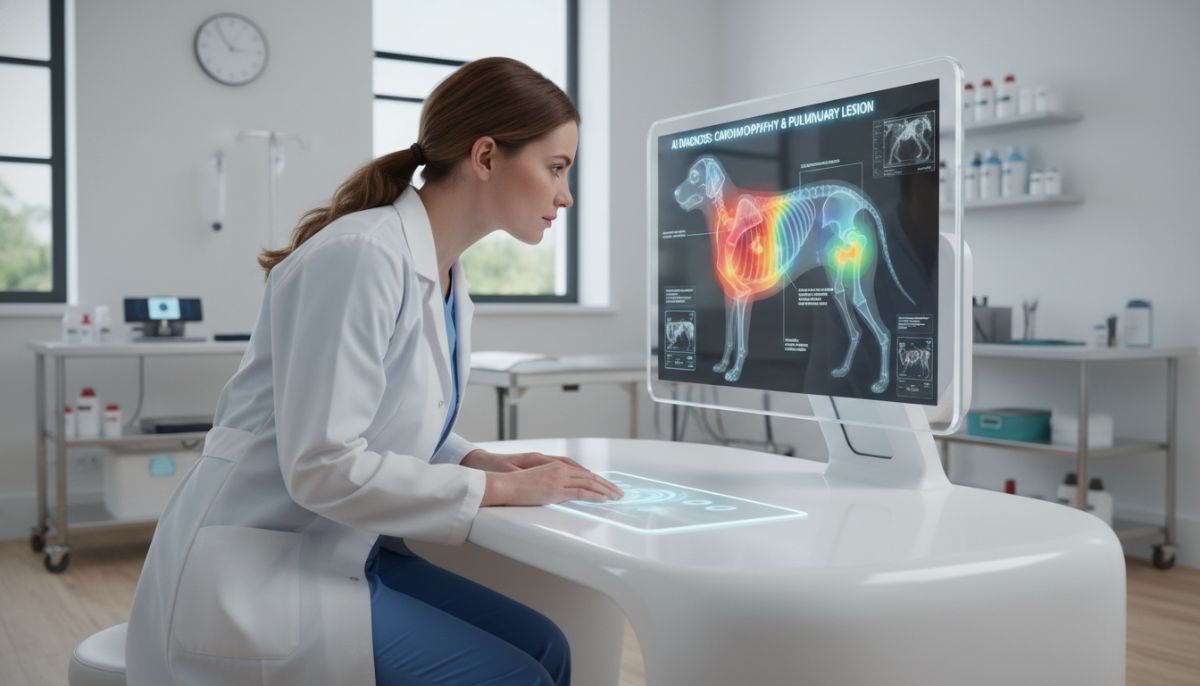
- Radiology and Imaging (X-rays, CT Scans, MRIs): AI software can detect subtle lesions, microfractures, or pulmonary patterns that the human eye might overlook in a busy clinical setting.
- Automated Pathology: Digital cytology and hematology platforms utilize AI to identify abnormal cell structures, parasites, or neoplastic changes within minutes instead of days.
- Predictive Analytics: By analyzing longitudinal blood work and health records, AI can predict the onset of life-threatening conditions, such as feline renal failure or canine cardiac disease, months before clinical symptoms manifest.
- Explicit Policy Language: Read the fine print of the policy document. Ensure that the terms “advanced imaging,” “automated laboratory diagnostics,” and “computational veterinary medicine” are listed under covered benefits.
- Pre-Existing Conditions Clauses: AI diagnostics are exceptionally good at finding early markers of disease. If an AI tool flags a genetic predisposition or early-stage change before your policy is active, it may be classified as a pre-existing condition. It is vital to secure coverage early in your pet\’s life to avoid exclusions.
- Claim Reimbursement Models: Look for insurers that offer direct payment to veterinary clinics or rapid reimbursement options, as AI-assisted veterinary clinics are often highly digitized and prefer automated transaction processing.
The Financial Imperative: Why Traditional Insurance Falls Short
Traditional pet insurance policies were designed during an era when diagnostics were limited to basic blood panels and standard X-rays. While these policies cover basic veterinary services, they often fail to keep pace with modern technology.
Without explicit coverage for AI-powered diagnostics, pet owners may face substantial out-of-pocket expenses. Advanced diagnostic procedures utilizing machine learning are classified under specialized services, which can lead to claim denials under outdated policy guidelines. Securing specialized pet health insurance with AI diagnostic coverage ensures that your pet has access to cutting-edge medicine without jeopardizing your household budget.
“The integration of artificial intelligence in veterinary diagnostics represents the most significant leap forward in animal health of this century. It allows us to transition from reactive care to proactive, preventative medicine, saving both pet lives and owner resources.”
Comparing Traditional Diagnostics vs. AI-Assisted Diagnostics
To illustrate the practical differences between conventional veterinary methods and modern AI-assisted diagnostics, consider the following comparative analysis:
| Feature | Traditional Diagnostics | AI-Assisted Diagnostics |
|---|---|---|
| Turnaround Time | 24 to 72 hours (often requires external lab transport) | Real-time to under an hour |
| Diagnostic Accuracy | Dependent on clinician experience and fatigue levels | High consistency, utilizing vast comparative databases |
| Early Detection | Typically identifies diseases after symptoms manifest | Detects microscopic or structural changes pre-symptomatically |
| Cost per Analysis | Variable; high specialist fees for manual reviews | Cost-efficient over time, though initial setup is premium |
| Policy Coverage | Broadly covered by standard insurance policies | Requires modern pet health insurance with AI diagnostic coverage |
[IMAGE_PROMPT: A happy golden retriever wearing a sleek smart-collar, walking alongside its owner in a sunny park, symbolizing modern pet health tracking and wearable AI diagnostics.]
Key Benefits of Pet Health Insurance with AI Diagnostic Coverage
Investing in a policy that specifically embraces AI technology yields several critical advantages for pet owners and their companions:
1. Rapid Diagnosis and Reduced Suffering
In emergency situations, minutes matter. If a pet ingests a foreign object or experiences acute internal trauma, AI-driven imaging analysis can provide instantaneous insights. Rapid diagnostic capabilities allow veterinarians to initiate life-saving interventions immediately, drastically reducing animal suffering and improving prognosis.
2. Financial Protection against Rising Vet Costs
As veterinary clinics adopt state-of-the-art AI software, the upfront cost of diagnostic procedures is rising. A comprehensive insurance policy ensures that you do not have to choose between financial stability and your pet\’s access to the best medical care available.
3. Early Detection of Chronic Conditions
Many chronic diseases, such as osteoarthritis, cardiac disease, and oncology cases, are progressive. When identified early through AI predictive algorithms, management strategies can be implemented sooner. This not only extends the pet\’s lifespan but also lowers the long-term cost of treatment by avoiding emergency crises.
What to Look for in an AI-Diagnostic Pet Insurance Policy
When shopping for a pet health insurance policy that covers modern technological treatments, keep the following considerations in mind:
[IMAGE_PROMPT: An insurance agent and a pet owner discussing a digital policy document on a tablet with a cute cat sitting on the office table, professional setting.]
Implementing AI Diagnostics: A Real-World Scenario
Consider the case of a seven-year-old Domestic Shorthair cat named Luna. Luna showed no outward signs of illness, but her owner had enrolled her in a premium pet health insurance with AI diagnostic coverage plan. During her annual wellness exam, the clinic utilized an AI-driven urinalysis and blood chemistry profiling system.
The AI software flagged a subtle shift in Luna\’s kidney biomarkers that fell within the traditional “normal” range but matched a pattern indicative of Stage 1 Chronic Kidney Disease (CKD). Because of this early AI detection, Luna\’s veterinarian prescribed a specialized renal diet and hydration plan. Two years later, Luna remains healthy and active. The insurance policy fully covered the advanced diagnostic profiling, saving the owner thousands of dollars in emergency renal crisis management.
Conclusion: Embrace the Future of Pet Care Today
Our pets are members of our families, deserving of the highest standard of medical care. The veterinary industry is evolving rapidly, with artificial intelligence leading the charge toward faster, more accurate, and highly predictive diagnostics.
Securing pet health insurance with AI diagnostic coverage is a proactive step toward safeguarding both your pet\’s health and your financial peace of mind. By choosing a forward-thinking insurance provider today, you ensure that when tomorrow comes, your beloved companion will have unrestricted access to the absolute best that modern science has to offer.